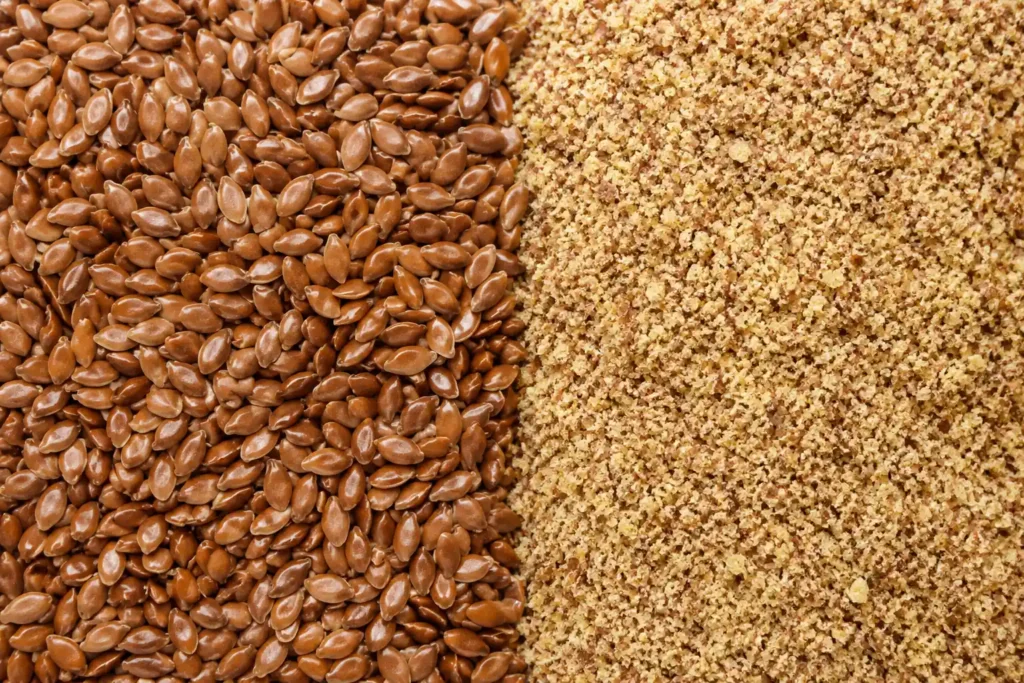
If you’ve spent any time researching flaxseed, you’ve probably run into a debate that seems surprisingly common:
Should you eat whole flaxseed or ground flaxseed?
At first glance, it might seem like a matter of personal preference. After all, it’s the same seed, right?
Well, yes and no.
Whole flaxseed and ground flaxseed both come from the same plant and contain many of the same nutrients. However, the way your body interacts with those nutrients can be very different depending on whether the seed is whole or ground.
The good news is that neither choice is necessarily wrong. The better option depends on what you’re hoping to get from your flaxseed.
The Tiny Seed with a Tough Shell
Flaxseed may be small, but nature designed it to survive.
Each seed is protected by a remarkably durable outer shell. That shell helps protect the seed until growing conditions are right, but it can also create a challenge for human digestion.
Many people are surprised to learn that whole flaxseed can sometimes pass through the digestive system largely unchanged. If you’ve ever noticed flaxseed appearing much the same way it went in, you’re not imagining things.
The nutrients are still inside the seed, but if the shell remains intact, your body may not have full access to them.
Why Ground Flaxseed Gets So Much Attention
Grinding flaxseed breaks open that protective shell and exposes the nutrients inside.
This is why nutritionists and health-conscious consumers often recommend ground flaxseed when the goal is maximizing nutritional benefits.
Once ground, the omega-3 fatty acids, fiber, protein, and lignans become much easier for your body to access.
Think of it like cracking open a walnut. The nutrition is there either way, but it’s much easier to enjoy what’s inside once the shell is opened.
For many people, ground flaxseed becomes a simple addition to everyday foods. It blends easily into smoothies, yogurt, oatmeal, protein shakes, baked goods, and even soups.
But Whole Flaxseed Still Has Advantages
If ground flaxseed is easier to digest, why would anyone choose whole flaxseed?
Freshness.
The same shell that makes digestion more difficult also protects the oils inside the seed.
Whole flaxseed can maintain its quality for much longer than ground flaxseed when stored properly. Once flaxseed is ground, those healthy oils become exposed to oxygen, light, and heat. Over time, they can begin to lose freshness.
This is one reason many flax enthusiasts prefer buying whole flaxseed and grinding small amounts as needed.
It gives them the best of both worlds: maximum freshness and maximum nutrient availability.
What About Fiber?
Interestingly, both forms can contribute fiber to your diet.
Whole flaxseed still contains fiber even if some of the nutrients inside the seed aren’t fully accessed. Ground flaxseed simply makes all of the seed’s components more available.
For people looking to increase dietary fiber, either option can play a role in a healthy eating plan.
Which One Tastes Better?
This may come down to personal preference.
Whole flaxseed has a mild, slightly nutty flavor and adds a bit of texture to foods.
Ground flaxseed has a softer texture and blends more seamlessly into recipes. Many people find it almost disappears into smoothies, muffins, pancakes, and oatmeal.
If you’re new to flaxseed, ground flaxseed is often the easiest place to start.
So Which Is Better?
If your primary goal is getting the maximum nutritional benefit from flaxseed, ground flaxseed generally has the advantage because your body can more easily access the nutrients inside the seed.
If your primary goal is long-term storage and freshness, whole flaxseed has a clear edge.
That is why many health-conscious consumers choose a simple compromise: purchase high-quality whole flaxseed, store it properly, and grind small batches as needed.
It’s a simple approach that combines convenience, freshness, and nutrition.
The GoldenFlax Difference
Whether you prefer whole flaxseed or ground flaxseed, quality matters.
Fresh, carefully handled flaxseed simply performs better in the kitchen and on the plate.
At GoldenFlax, our premium golden flaxseed is grown, harvested, cleaned, and packaged with a focus on quality and freshness. Because we sell directly from farm to table, customers know exactly where their flaxseed comes from and how it was handled along the way.
That’s something increasingly important to consumers who care about the food they eat and the farms that grow it.
The Bottom Line
The whole flaxseed versus ground flaxseed debate isn’t really about which one is good and which one is bad.
Both have their place.
Ground flaxseed makes nutrients more available and is easy to incorporate into everyday meals. Whole flaxseed offers excellent shelf life and flexibility for long-term storage.
For many people, the ideal solution is simple: buy fresh whole flaxseed and grind only what you need.
Your taste buds, your pantry, and your body may all appreciate the difference.